How to choose sofa depth according to living-room size
Seat depth affects posture, footprint and circulation. This guide explains how to assess it against room dimensions, daily habits and the desired level of comfort.
A measurement that changes how a room is lived in
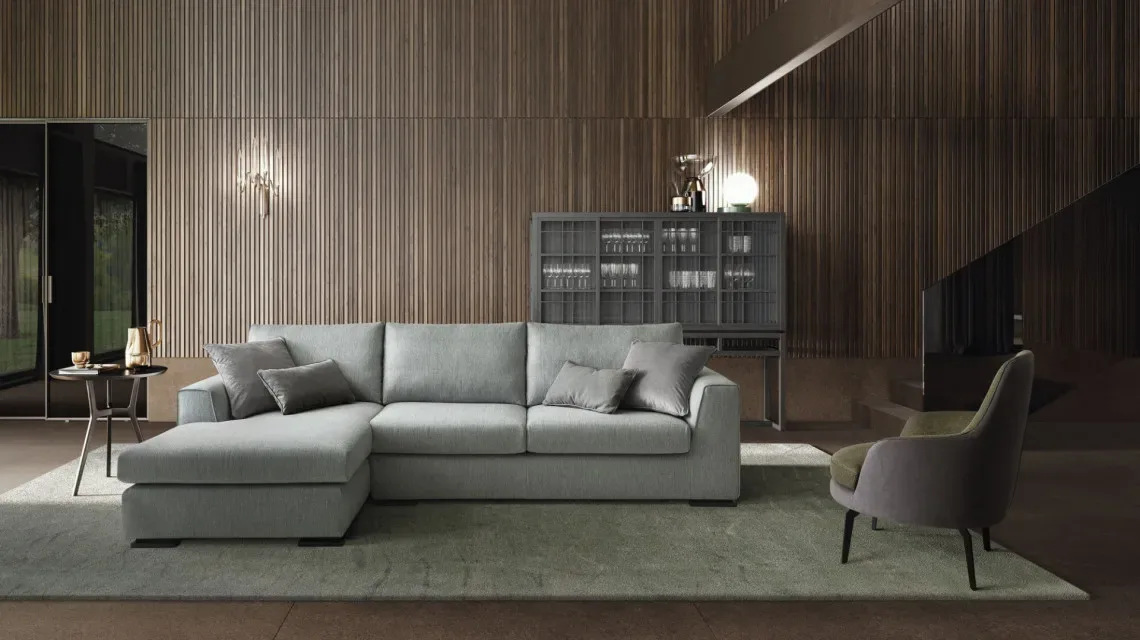
Sofa depth is often considered after length, colour and upholstery, as though it were a secondary specification. In reality, it affects comfort, posture, circulation and perceived proportion at the same time. Two sofas of identical length can occupy and shape a living room very differently when one has an upright, compact seat and the other is a deep volume designed for relaxation.
Choosing correctly does not mean finding one ideal measurement for everyone. It means relating room size, the users’ bodies, their main activities and the structure of the model. The stated overall depth includes the back and cushions, while usable seat depth determines the position of the body. Both figures are needed to compare different options meaningfully.
Overall depth and usable seat depth
Overall depth is measured from the foremost point of the sofa to the rear of the backrest. It is the figure needed to check the footprint on a floor plan. Usable depth describes the space from the front edge of the seat to the back cushion. This second measurement directly affects leg support and posture.
A thick backrest may considerably reduce usable seating even when the total footprint is generous. Conversely, a slim structure may provide good seat depth while occupying less floor area. Loose lumbar cushions alter the figure again: in place they encourage an upright position; removed, they allow the user to stretch out.
Seat height also contributes to comfort. A deep, low seat encourages an informal posture, while a higher level makes it easier to place the feet on the floor and stand up. Depth, height and backrest angle should be treated as one system.
Measuring the available space
To establish how deep a sofa can be, start with the free floor area rather than the wall alone. The plan should include doors, windows, radiators, furniture, tables and circulation. In a living room crossed frequently, a simple route must remain open without interfering with seated people.
The most reliable method is to mark the complete footprint on the floor with removable tape or sheets of paper. Arms, chaise longues and reclining elements should also be represented. Walking around the outline, opening doors and drawers and simulating the use of the coffee table reveal problems that an isolated dimension will not show.
The area in front must allow a person to stand and reach nearby surfaces without restriction. If a media wall faces the sofa, both circulation and a suitable viewing distance must be maintained. Behind a sofa positioned centrally, space may be needed for a walkway or console.
Compact living rooms: prioritising efficiency
In a small room, every centimetre should produce a practical benefit. A very deep sofa may support a reclining posture, but reduce circulation and prevent the use of a suitable table. Frames with restrained backs and arms are effective because they maximise usable seating without excessively increasing the footprint.
A more compact depth supports conversation and allows most people to rest against the back while keeping their feet on the floor. Relaxation can be added with a mobile ottoman that temporarily extends the seat and moves away when more floor space is needed.
Oversized arms and an excess of decorative cushions are best avoided. They consume usable area and increase the impression of fullness. Visible feet, recessed bases and moderately low backs expose more flooring and contribute to visual lightness without changing actual measurements.
Medium-sized rooms: balancing different uses
In an intermediate living room, conversation, television, reading and entertaining often need to coexist. A medium-depth seat with removable lumbar cushions allows the posture to move between supported and relaxed. Ergonomic versatility may be more valuable than an extreme volume.
If the room is long and narrow, depth must be controlled so that the main circulation axis is not compressed. In a squarer plan, an L-shaped arrangement can distribute volume in two directions. The chaise longue should occupy the side with less traffic, avoiding a barrier between the entrance and centre of the room.
The relationship with chairs and tables is decisive. A deep sofa combined with substantial occasional furniture can quickly saturate the interior. Alternating mass and empty space, and selecting light or nesting tables, keeps the conversation area flexible.
Large living rooms: avoiding the wrong scale
A generous room permits a deep sofa but does not require one. The desired type of comfort remains the main criterion. A large volume can define a central island and accommodate seats facing different directions, yet it must remain proportionate to the other elements and the room’s height.
When the sofa stands away from walls, the depth of the back becomes visible. Its rear should be finished with the same care as the front and may relate to a console, provided adequate circulation remains. Correctly sized rugs connect modules and prevent a large sofa from appearing isolated.
In open-plan spaces, a deep element can separate living and dining areas. It should not block views or daylight. Low backs and raised bases reduce the barrier effect, while open ends encourage a relationship between zones.
Body, posture and habits
Room dimensions establish what is possible; the body defines what is comfortable. Shorter people may find a very deep seat uncomfortable if the back does not include compensating cushions. Taller users may experience a shallow seat as insufficiently supportive.
A trial should last more than a few seconds. Sit as you would at home, checking lumbar support, knee position and the effort required to stand. If the sofa will be used for reading, test support in an upright posture; for films or rest, try a more extended position.
Older people and users with limited mobility generally benefit from a seat that is not excessively low or yielding. Ease of movement is part of comfort and should not be sacrificed to softness alone.
Cushioning changes perception
The same depth can feel different according to the cushioning. A supportive seat keeps the body closer to the surface and makes changing position easier. A softer seat embraces the body more deeply, increases the sensation of depth and requires greater effort when standing.
Large back cushions reduce usable space and adapt to the body, while fixed backs retain a more stable geometry. Cushions require care to distribute wear. Turning and plumping them, when permitted, helps preserve evenness and support.
Upholstery affects tactile experience. Textured fabrics can increase grip and warmth, while smoother surfaces permit small movements more easily. Resistance, cleaning and behaviour over time should also inform the choice.
Special configurations and mechanisms
Chaise longues, pull-out seats and recliners change the footprint during use. Measuring them only when closed is insufficient: full extension and the distance from tables, walls and walkways must be checked. A mechanism that seems useful in a showroom may be unusable if there is not enough space in front.
Modular systems can vary depth without extending the whole composition. A linear section supports conversation while a deeper module accommodates relaxation. Their junction should maintain consistent heights and avoid exposed corners along routes.
If the sofa incorporates a bed, closed depth does not describe its operating footprint. Opening space, side access and room needed to make the bed must all be measured. Function should be tested in the actual room, not only on a technical drawing.
Tables, rugs and distances
The table should be reachable without forcing the body to lean excessively. At the same time, it must leave room for the legs and for standing. With very deep seating, small side tables may be more convenient than one central surface.
The rug defines the zone, but its thickness should suit feet, mechanisms and mobile modules. A surface that is too small makes the sofa appear even larger; a proportionate rug creates a shared base and balances the volume.
Lamps and sockets also need consideration. A deep seat used for reading requires correctly positioned light. Cables and fixtures must not restrict circulation or prevent transformations.
Upholstery and visual weight
Upholstery can make a deep sofa appear lighter or more compact. Light and mid tones reflect illumination and reveal lines; dark colours concentrate the volume and create depth. The decision should be checked in the actual room.
Highly tactile textures increase the sensation of softness but may add visual weight across broad surfaces. Compact weaves and essential seams define the profile more clearly. Upholstery quality matters because folds and irregular tension are evident on large depths.
Abrasion resistance, removable covers and cleanability should suit use. Seating intended for daily relaxation receives intense contact and needs materials capable of preserving appearance and comfort.
Common errors
One common error is inferring comfort from overall depth. A bulky model may provide limited usable seating, while a well-designed frame uses space efficiently. Another mistake is choosing from photographs: wide-angle lenses and generous settings distort the perception of proportion.
Using every available centimetre is risky. A small spatial reserve improves circulation, cleaning and the possibility of changing accessories. Ignoring differences between users also produces seating suited to one person and less versatile for others.
Finally, depth and height should not be assessed separately. A deep, high and supportive seat creates a different experience from a deep, low and soft one. The complete system needs testing.
A reliable method of selection
A sound sequence is to measure the room, define circulation, establish activities, identify the maximum footprint and only then compare seats. Upholstery samples and an ergonomic trial complete the assessment.
The correct depth allows the living room to breathe and lets people adopt the postures they want. When footprint, ergonomics and circulation are studied together, the sofa ceases to be a volume that merely needs placing and becomes part of the domestic architecture: comfortable, proportionate and capable of retaining its quality over time.